A Blueprint for AI-Powered Healthcare in Kenya: AI and Health Roundtable Discussion
AI in healthcare
Consider Mary, a 30-year-old expectant mother living in rural Kenya. Her health and that of her child’s depend on regular prenatal checkups, but there’s a catch—the closest health center is more than 50 kilometers away, and getting there involves a bumpy journey on an unreliable bus. And even if she makes it, there’s no guarantee that she’ll see the doctor. Sometimes, after hours of waiting, she leaves without being attended to because the doctor is overwhelmed with too many patients.
This is Mary’s reality, but it’s not just hers—it’s the reality of millions of African women . In fact, Kenya faces a staggering doctor-to-patient ratio of 1:100,000, leaving the vast majority without timely access to critical medical care. In some areas, the shortage is even more acute, with facilities lacking not just doctors but also essential equipment. The 2023 Health Facilities Census by the Ministry of Health indicates that 93% of Kenya’s health facilities cannot provide basic outpatient services. The census, which covered over 12,000 health facilities, revealed that a majority lack the necessary equipment for basic services. For maternity services, 84% of around 5,000 facilities lack essential equipment.
It’s not just inconvenient; it’s a matter of life and death.
Now, imagine if Mary had access to an AI-powered health app on her phone, one that gave her personalized advice about her pregnancy, sent reminders for antenatal care, and even helped her identify warning signs of complications. This is not some distant science fiction—tools like Qhala’s Atunzi, an AI-driven health chatbot, are making these health solutions available. AI could quite literally mean the difference between life and death for Mary and her unborn child.
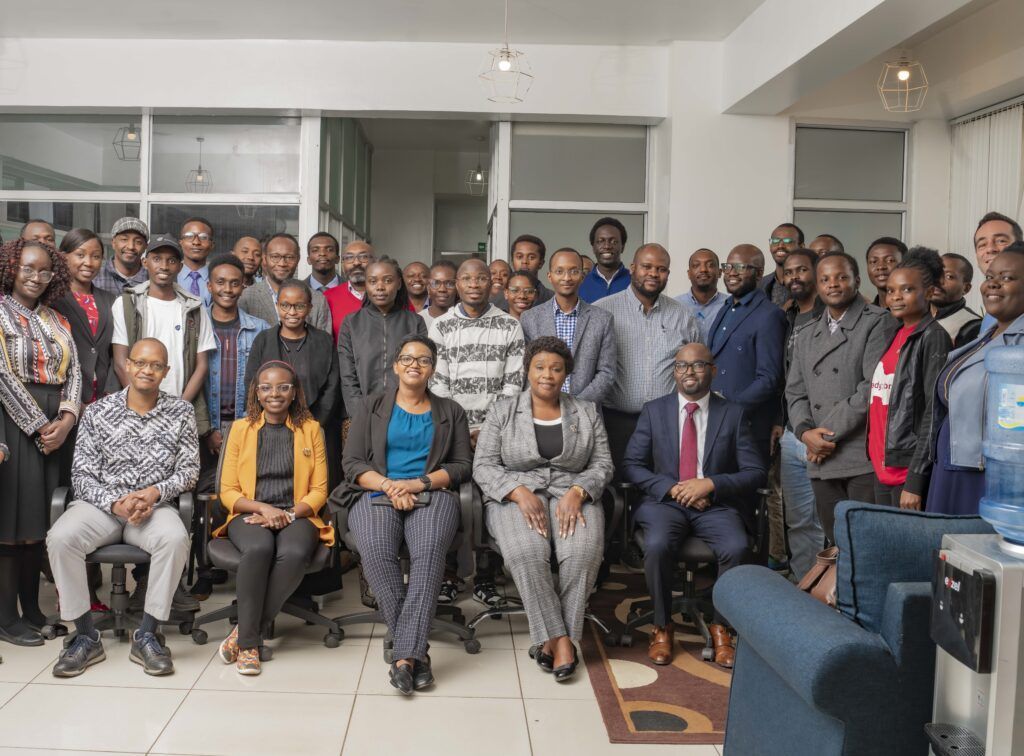
Mary’s story is one of many that underscore the urgent need for AI in healthcare. It’s why Qhala, in collaboration with the Ministry of Information, Communication, and the Digital Economy – and the Global Partnership for Sustainable Development Data – brought together healthcare professionals, AI experts, policymakers, civil society representatives, and technologists to discuss the intersection of AI and health— and what the Kenyan government should consider while crafting the National AI Strategy. Kenya’s distinctive approach to developing a National AI Strategy is indeed commendable; it begins with creating a strategic framework rather than jumping straight into policy or regulation. The AI strategy can be likened to an architectural blueprint. Just as a generic house plan may not suit your specific needs, a one-size-fits-all policy or regulation may not be optimal for AI development. This alternative approach ensures that AI systems are contextually relevant and effective for Kenya.
During the roundtable discussions, several priorities for AI adoption in healthcare emerged, ranging from governance improvements to workforce augmentation. The workforce issue, in particular, is pressing. Consider the fact that Kenya has only 2 pathologists per million population; serving over 50 million people. This is where AI can make a real impact—automating diagnostic tasks, such as analyzing medical images, to help alleviate the burden on overworked specialists. AI could serve as an invaluable assistant, freeing up medical professionals to focus on complex cases and ultimately improving the quality of care for patients like Mary.
The dire need for greater data representation from Africa also took center stage. For AI to work effectively in diagnostics or treatment, it needs to understand the unique genetic, environmental, and social factors of the populations it serves. Western-trained AI models often overlook these aspects, resulting in biases that can be detrimental when applied to African contexts. For instance, local medicinal knowledge and alternative health practices that have been used for generations are frequently absent from global datasets. This creates a situation where AI systems may offer solutions that are ineffective or inappropriate for African patients. By ensuring that African health data is included in the design of AI systems, we can build digital tools that are accurate and applicable to local needs.
Data sovereignty, therefore, becomes crucial. It’s not enough to collect health data; it must be owned, managed, and used by Africans to benefit their communities. Health data should inform the development of AI that works for Africa, and not be repurposed by foreign entities without regard for local contexts. Eurocentrism in AI is alive and well, much to the disadvantage of the Global South. We refer to it as the ‘Brussels Effect‘—Europe’s soft power in shaping the global digital economy. But should it continue unchecked? Absolutely not!
This issue of representation isn’t just technical—it’s deeply tied to autonomy and the future of Africa’s healthcare.
The roundtable also highlighted the importance of digital infrastructure and equitable access. There were 22.71 million internet users in Kenya at the start of 2024, with internet penetration standing at 40.8%. The Network Readiness Index ranks Kenya at 76 out of 134 economies, assessing factors related to technology access, including mobile tariffs, handset prices, Fiber to the Home/building internet subscriptions, the percentage of the population covered by at least a 3G mobile network, international internet bandwidth, and internet access in schools. Electricity penetration in Kenya stands at 76%, meaning that 24% of the country’s population is yet to enjoy the fruits of the Second Industrial Revolution. The country’s adoption of the Internet of Things has not been without challenges either. Without proper digital infrastructure, even the best AI technologies will fail to reach those who need them most. Mary’s remote village is a prime example; if digital services don’t extend to her, then AI can’t either. Strengthening digital infrastructure, particularly in underfunded regions, was a recurring theme, emphasizing that no one should be left behind in this technological leap.
Gary Vaynerchuk rightly observed that ‘without a dollar, you can’t make a great product.’ AI adoption requires sustainable models that move beyond donor dependency. By fostering local AI markets, Kenya can stimulate innovation and growth within its borders. Developing long-term healthcare financing models to support AI tools is crucial for making them accessible to people like Mary.
So why do doctors need to be part of Kenya’s AI strategy? Because they understand the gaps, the challenges, and the potential of AI in a way that no one else can. Doctors are the ones on the ground, managing overcrowded wards like Pumwani Maternity Hospital, where they see firsthand how AI could help manage high patient volumes or automate routine administrative tasks. They know what’s lacking—whether it’s a pathologist to examine a biopsy or an ultrasound machine to check on a baby’s growth. Their insights are essential for developing AI tools that are practical, ethical, and designed for the reality of healthcare in Kenya.
AI holds immense promise for transforming healthcare in Kenya, but it needs the collaboration of all stakeholders to succeed. It must be practical, adaptable, and inclusive. It must prioritize local needs, strengthen infrastructure, and uphold data sovereignty. Above all, it must put people—patients and healthcare workers—at the heart of its advancement. As Dr. Shikoh Gitau, CEO of Qhala, aptly put it at the roundtable, “AI – and indeed all tech – should be an enabler to Kenya’s development.”
With the groundwork laid and the conversations ongoing, Kenya’s journey towards AI-powered healthcare is just beginning. And for Mary, and millions like her, it could mean a future where healthcare is not a distant hope, but an everyday reality.