Health Sector AI Roundtable by Qhala
AI in health
Africa bears a huge disease burden, a statistics by WHO shows that this accounts for 24% of the global disease burden. Over half of the population live on less than a dollar daily; in 2024 alone, it is estimated that over 429 million people live in extreme poverty with the poverty threshold being 2.15 USD per day and this has made access to healthcare almost impossible. It does not help that many people have businesses that depend entirely on their presence to operate and more often than not, opt to forgo even the basic healthcare because taking time off means losing the opportunity to get income that may significantly affect their livelihoods. It is often a dilemma choosing between health and financial stability.
Even with the public health system under strain as the continent continues to fight not only infectious diseases but also chronic diseases and nutritional deficiencies, there have been some improvements in addressing issues including inadequate infrastructure, healthcare professionals and limited access to healthcare services.
In 2024, the healthcare sector in Africa can be considered a major growth and innovation opportunity. This is due to the many health challenges that the continent faces, the large and growing population and the digital health opportunities presented by the widespread adoption of mobile technology. Governments and different stakeholders in the industry continue to come together with the hopes of enhancing access to quality and improved healthcare throughout the continent.
Innovation in Africa
In the day and age where technological advancements are taking precedence in many industries globally, the healthcare sector cannot be left behind. Adopting and integrating these technological innovations brings this sector a step closer to improving efficiency and meeting the evolving needs of patients and healthcare providers.
However, due to the true physical nature of healthcare, innovation in this field might be challenging. The final evaluation of any healthtech solution is whether or if it enhances a patient’s physical quality of life. Every patient has a different quality of life, and they also have different logistical needs when receiving medical care, and their awareness of solutions may differ from what the patient actually needs.
Africa is facing a convergence of health concerns that digital technology might help solve, including a surge in non-communicable diseases, a threat from climate change, and a youthful, tech-savvy population.
Artificial intelligence is believed to transform health care around the world. By 2030, AI is projected to contribute $15.7 trillion to global GDP, with $6.6 trillion coming from increased productivity and $9.1 trillion from consumption effects. AI has the power to significantly alter how businesses run, spur innovation, and enhance the lives of millions of Africans. Healthcare, agriculture, education, and banking are a few important industries that could benefit from artificial intelligence.
Artificial Intelligence has already found several uses, particularly in the field of health. AI is being used across Africa to aid health care, managing datasets in Morocco, reading genomes in South Africa, analyzing medical images in Ghana and tracking COVID-19 in Ethiopia. This technology is helping us deal with some of Africa’s biggest healthcare challenges.
The Health Sector AI roundtable hosted by Qhala
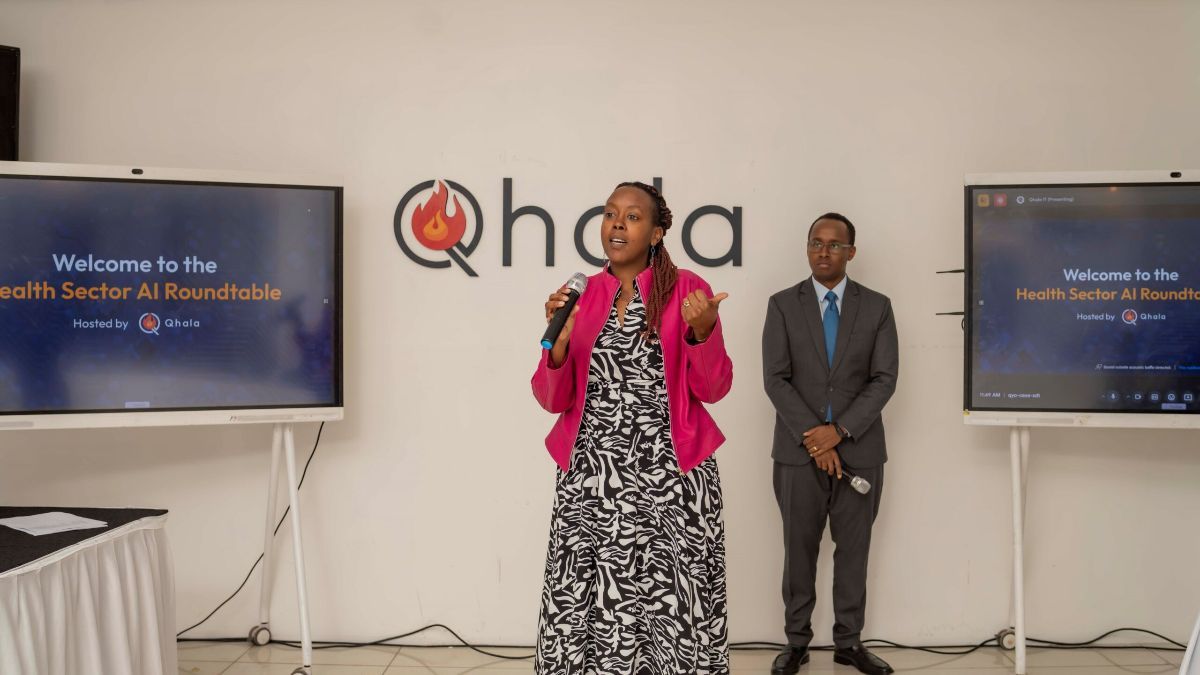
On the 18th of this month, Qhala held a convening to talk about AI and health in Africa. The hybrid event brought together a diverse group of stakeholders including tech experts, investors, big pharma representatives, innovators, tech professionals and medical practitioners to address the pressing healthcare challenges in Kenya and Africa as a whole.
The objectives of the roundtable were to;
Bring together key medical practitioners in Kenya to explore how they use AI and get to learn some key areas the medical practitioners believe AI will help them in their practice.
Explore some of the actual use cases/practical solutions they’ve built/are building using AI.
Uncover the key datasets they need as medical practitioners as they use AI to build solutions in the healthcare space.
Strengthen networks and collaboration among stakeholders engaged in the healthcare sector, policy makers and the tech community.
Insights from the Roundtable
Open-source datasets need to be interoperable
During the first session, participants discussed data in the healthcare space. Data sovereignty, data quality, data storage and data residency continue to be key concerns in tech convenings. Throughout the conversation, the stakeholders emphasized the broad scope of data and the need to consider its vast potential and implications.
Participants emphasized the need for open-source data sets to be interoperable. To be able to share data, we need to define what data sharing would look like in different industries, and look at the culture the country has when it comes to data sharing.
How do we use the framework that we have to try and create an ecosystem that allows us to share information. – Mark Irura
However, even with this advocacy for interoperability and data sharing, some of the main concerns around the cost of health data and data safety should be considered even as the healthcare industry works towards using technology in revolutionizing provision of healthcare.
Data and AI Use Cases
It is a matter of identifying problems that are local and also the priorities we need to be focusing on. AI is going to revolutionize the way medicine works.- Dr Timothy Kamanu
Several participants showcased some of the use cases they already have on AI in healthcare.
The Qhala Data team showcased Atunzi, a maternal and child health chatbot and a language model on Whisper which is trained to transcribe a mixture of English and Swahili; “SwaEnglish”.
Dr Fred Mutisya, a medical doctor and award winning AI developer showcased antimicro.ai, a solution leveraging AI in predicting antibiotic resistance using Kenyan data and global information from Welcome Trust.
Watau Gaita from BroadReach Group also showed how we could use AI in predictive healthcare. She spoke on proactive programmatic interventions, emphasizing the importance of anticipatory rather than reactive measures. This way, we will be building solutions that work effectively.
Dr Wachira Ngatia from Stats Speak showcased how he used GIS tools to conduct in-depth analysis on flooding patterns.
Finally, Dr Jean Kyula from Helium Health explained how we could use AI in healthcare; in maternal health, transcription of medical consultations, loan affordability predictions and data generation.
Importance of AI in Healthcare.
Many people have been skeptical about using AI in several fields, not just in Healthcare. Participants of the roundtable stressed on AI being a necessity and not a suggestion.
AI is not here to replace humans but to complement the doctor. Cardiovascular data shows that we really need AI but AI has to work with the doctor. AI needs to give an avenue of improving the doctor’s capabilities – Dr Amaya Amuko
To effectively and efficiently use AI in the healthcare sector, we need to;
Consider the PPEs in healthcare; People, Processes and Expectations. Most patients prefer human interactions over AI consultations and therefore it is important to incorporate this aspect when building AI solutions. Additionally, systems and policies should be inclusive and thoughtfully implemented ensuring that the clinician is the primary agent of change and not the systems themselves.
Understand the problem we are trying to solve, the data we have to solve the problem and the capacity within organizations to perform data analysis.
Enhance collaborations between policymakers, tech and medical professionals, and other stakeholders to create a cohesive healthcare ecosystem.
Ensure quality control during AI training given the complex nature of health conditions.
Identify local problems affecting us, focus on basic healthcare outcomes and use AI to solve prevalent health issues affecting a majority of the population
As we continue to incorporate AI in transforming healthcare in Kenya and the entire African continent. We need to set clear objectives of what and how we want to achieve this, however, it is crucial to have an open mind about the possibilities.
The future will reward clarity and punish certainty – Caroline Mbindyo, CEO, Amref Health Innovations
The Health Sector AI Roundtable provided a platform for meaningful exchange of information and ideas and highlighted the potential of AI in revolutionizing healthcare in Africa. It is a start to many conversations with stakeholders on how well we can integrate AI in healthcare. With a strong call to action for ongoing collaboration and innovation to address our healthcare challenges, this roundtable set the stage for a more effective and inclusive healthcare future in Africa.
Click here to read the full report